Dubai vs Abu Dhabi Luxury Travel 2026?
Dubai vs Abu Dhabi Luxury Travel? In 1966, oil was discovered beneath the sands of Abu Dhabi. It was the largest onshore oil reserve ever found in the Middle East, and it transformed not just a small trading settlement on the Arabian Gulf but the entire concept of what a city could become in a single generation.
The wealth that followed is not ancient. The Burj Khalifa—the tallest building in the world at 828 meters—was completed in 2010. The Sheikh Zayed Grand Mosque in Abu Dhabi, with its 82 domes and capacity for 40,000 worshippers, opened in 2007. The Louvre Abu Dhabi, designed by Jean Nouvel as a rain of light beneath a perforated dome, opened in 2017.
Two cities. Same desert. Same national flag. Same founding decade of modern prosperity.
And yet Dubai and Abu Dhabi are, in every meaningful way, completely different places to travel. Dubai features record-breaking marvels like the Burj Khalifa and luxury artificial islands. It caters to an elite dining crowd with 14 Michelin stars and a liberal social atmosphere. Abu Dhabi serves as a more refined alternative, focusing on elegant luxury and spiritual experiences, with seven Michelin stars and a slower pace.
This guide will tell you exactly which one belongs on your itinerary in 2026, Dubai vs Abu Dhabi Luxury Travel—and why.
You may find more valuable articles here:
Best Time to Book International Flights from USA (2026 Guide to Save Money)
Luxury for Less: Scoring Cheap Flights from Chicago to Dubai under $500
The Fundamental Difference Nobody Says Out Loud
Dubai rewards curiosity and energy. There is always something to do or happening, but it can feel relentless. Even when you’re relaxing, the city never fully slows down. Abu Dhabi doesn’t compete for attention. The architecture is intentional, the resorts feel spacious, and the pace encourages you to actually stop.
This distinction—relentless vs. intentional—runs through every comparison that follows. Neither is better in absolute terms. They are better for different travelers at different moments in their lives.
Dubai: The City That Invented Its Own Category
The Scale of It
Dubai is not just a big city. It is a city that decided, in the space of about 40 years, to become the most audacious urban environment on earth—and largely succeeded.
The numbers are almost comical. The Burj Khalifa has 163 floors. The Dubai Mall is one of the largest in the world, with over 1,200 stores, an indoor ski slope, an Olympic-sized ice rink, and an aquarium containing 33,000 aquatic animals, including the world’s largest indoor fish tank. The Palm Jumeirah — an artificial palm-shaped island visible from space—was constructed by depositing 94 million cubic meters of sand and 7 million tons of rock into the sea.
Dubai is best suited for a tourist who seeks an energy-filled experience. Diversity is something Dubai does best, with indoor ski slopes, mega aquariums, luxury restaurants, and mixed neighbourhoods within reach.
The Hotels
Dubai’s hotel scene supports ultimate luxury and a few hidden boutique gems. The choice is extraordinary:
Burj Al Arab
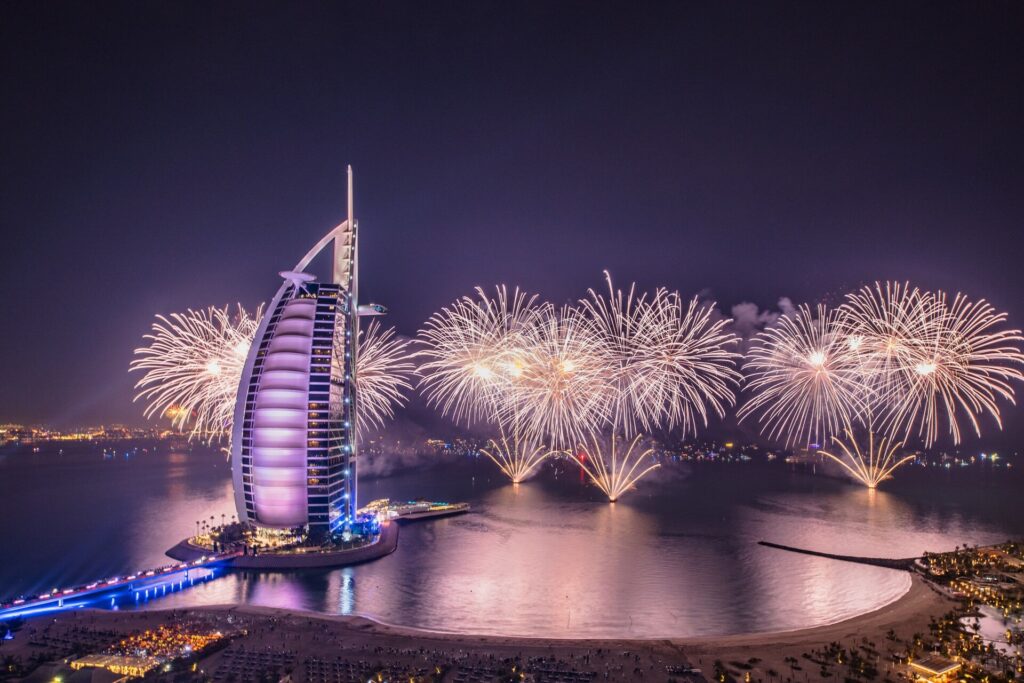
The sail-shaped hotel on its own artificial island is the most photographed building in Dubai and one of the most recognizable hotel silhouettes on earth. Every room is a duplex suite. The gold-leaf interior design is deliberately, unapologetically excessive. The hotel operates its own fleet of Rolls-Royce transfers and a private helicopter for airport arrival. You need a reservation for one of their expensive restaurants or spas—you cannot even enter the building without a written confirmation.
👉 Check availability at Burj Al Arab — Klook.com
Atlantis The Royal, Palm Jumeirah
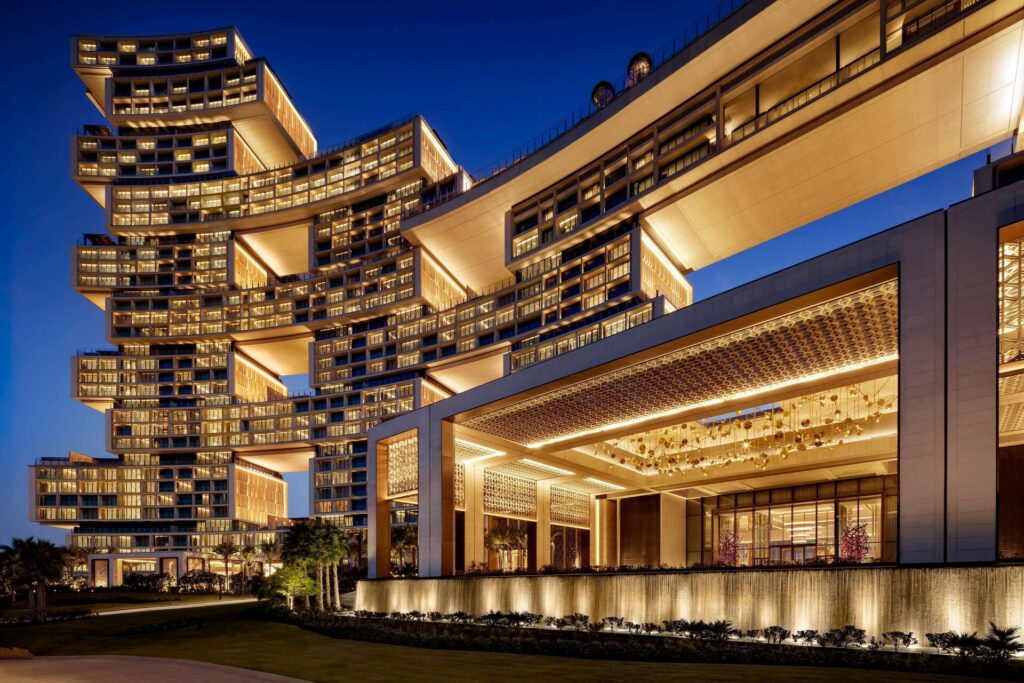
A statement luxury resort with multiple pools, private beaches, and world-class dining in a contemporary playground setting. The Royal Atlantis opened in 2023 and immediately became one of the most photographed hotels in the world, featuring a 90-meter-long sky pool suspended between two towers, 17 celebrity-chef restaurants, and a private members beach club.
👉 Check availability at Atlantis The Royal — Klook.com
One&Only The Palm
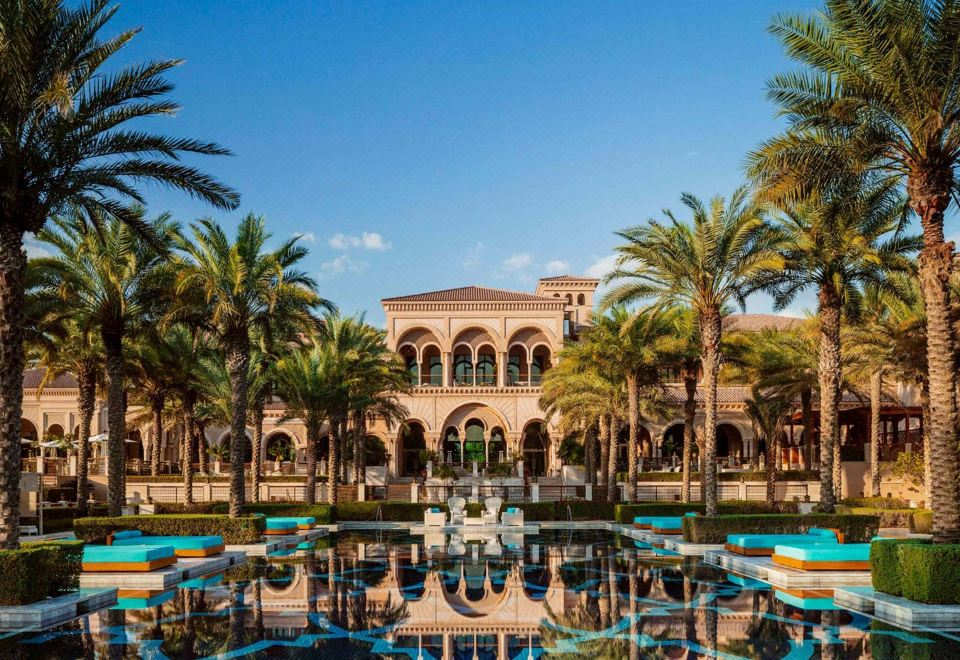
Boutique beachfront seclusion with refined service and lush gardens. Perfect for honeymooners or travelers seeking calm luxury. The deliberate contrast to its neighbors — small scale, quietly extraordinary service, and an intimacy that most Palm Jumeirah hotels sacrifice for spectacle.
👉 Check availability at One&Only The Palm — Trip.com
The Food Scene
Dubai caters to an elite dining crowd with 14 Michelin stars. The restaurant scene is genuinely one of the finest in the world—a combination of globally renowned chef outposts, innovative homegrown concepts, and extraordinary variety driven by the city’s 200+ nationalities. Nobu, Zuma, Nusr-Et, Coya, Hakkasan, Torno Subito by Massimo Bottura — the list of serious restaurants is longer than most European capitals.
The beach club scene—Nikki Beach, Zero Gravity, Cove Beach—represents a category of social luxury that Dubai essentially invented and has never been surpassed.
The Experiences
- Burj Khalifa At the Top — 124th floor observatory, 828 meters above the desert floor GET YOUR TICKET ON TIQET.COM
- Private desert safari with luxury overnight camp—dune bashing, camel rides, and sleeping under the stars in a Bedouin-style camp. Book Your Desert Safari with TIQET.COM
- Helicopter tour over the Palm and Downtown—the only way to grasp the scale of what has been built here.
Book Your Helicopter Today!
- Private dhow dinner cruise—traditional wooden boat on Dubai Creek with the city skyline as backdrop .
BOOK Now on Trip.com
Abu Dhabi: The Capital That Doesn’t Need to Shout
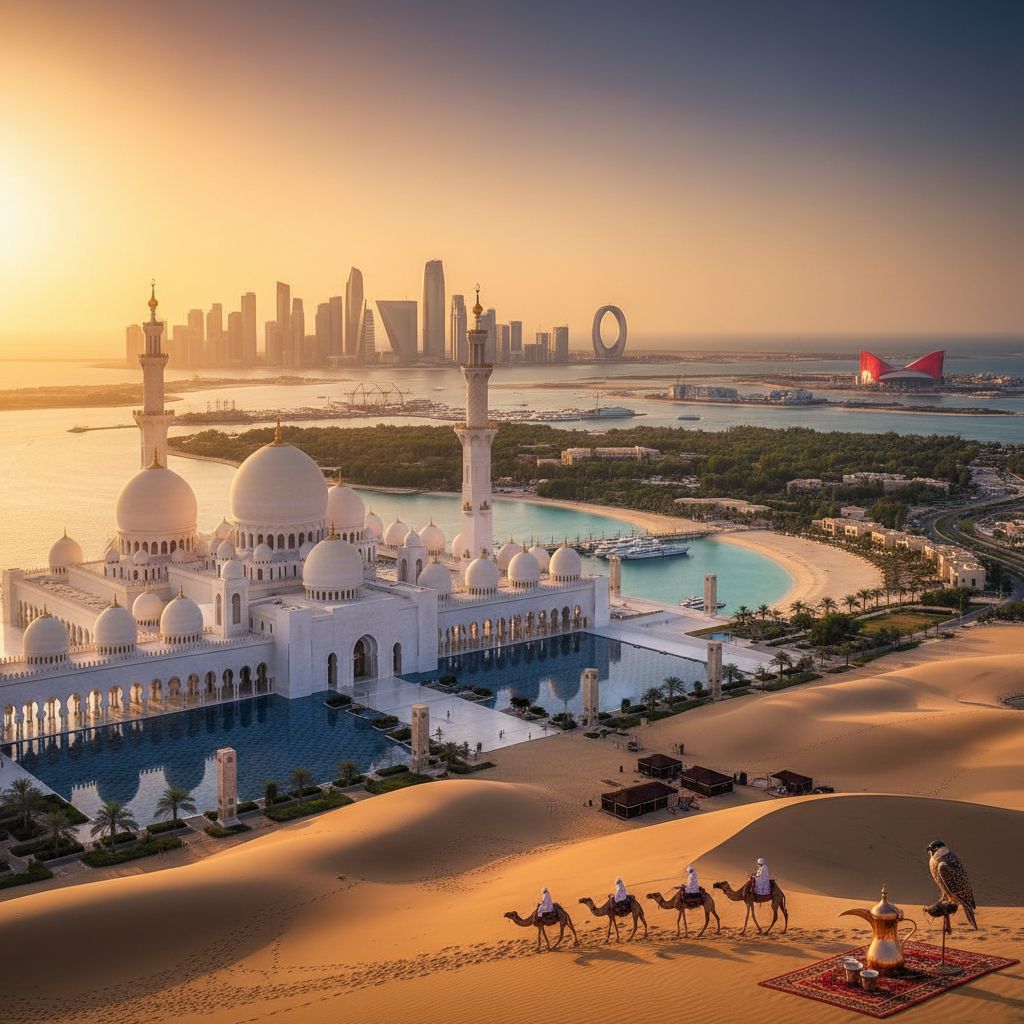
The Quiet Confidence of the UAE’s Capital
Abu Dhabi ranks as the safest city in the world for 2026. It is the political and cultural capital of the UAE, meaning visitors get a more authentic taste of the country’s history and heritage.
Abu Dhabi has approximately 1.5 million people compared to Dubai’s nearly 3.5 million. It has fewer tourists, wider roads, more beach, and a palpable sense of a city that doesn’t feel the need to compete for your attention. The hotels here tend to feel more spacious, more relaxing, and more connected to the beach and culture of the city.
The difference hits you immediately. Dubai’s energy is electric and slightly overwhelming. Abu Dhabi’s energy is deliberate and surprisingly easy to inhabit.
The Hotels
Emirates Palace Mandarin Oriental
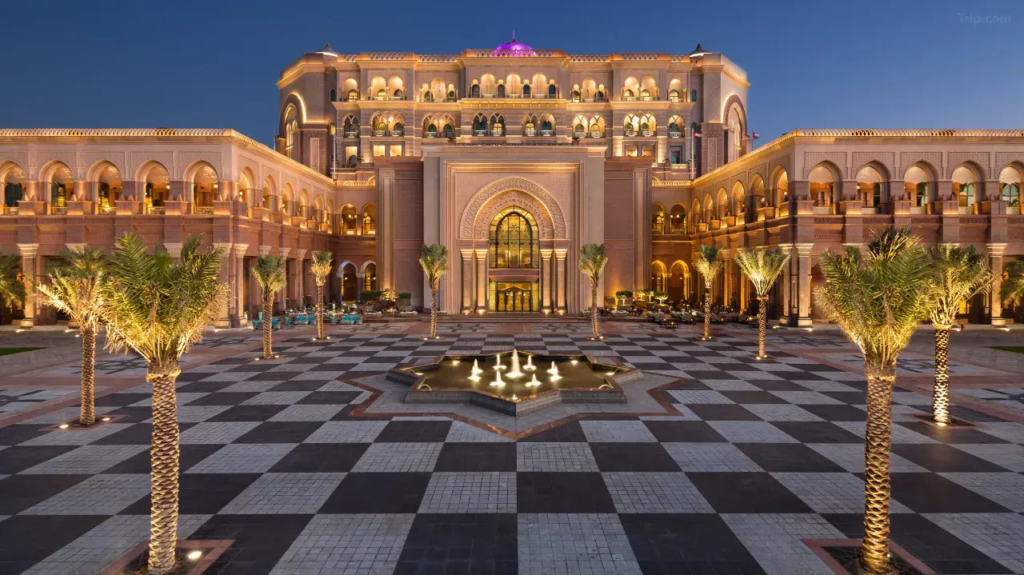
If the Burj Al Arab is Dubai’s great hotel statement, the Emirates Palace is Abu Dhabi’s. Opened in 2005 at a construction cost of $3 billion, the palace covers 85 hectares of beachfront and contains over 1,000 chandeliers, 114 domes, and enough gold leaf to cover a small country. The Emirates Palace is open to visitors who don’t want to spend a fortune on a room—you can dine at their restaurants without prior reservations and experience the hotel and garden. The signature experience: Camel Milk Cappuccino topped with 24-karat gold flakes, served in the lobby café.
👉 Check availability at Emirates Palace — Trip.com
The St. Regis Abu Dhabi
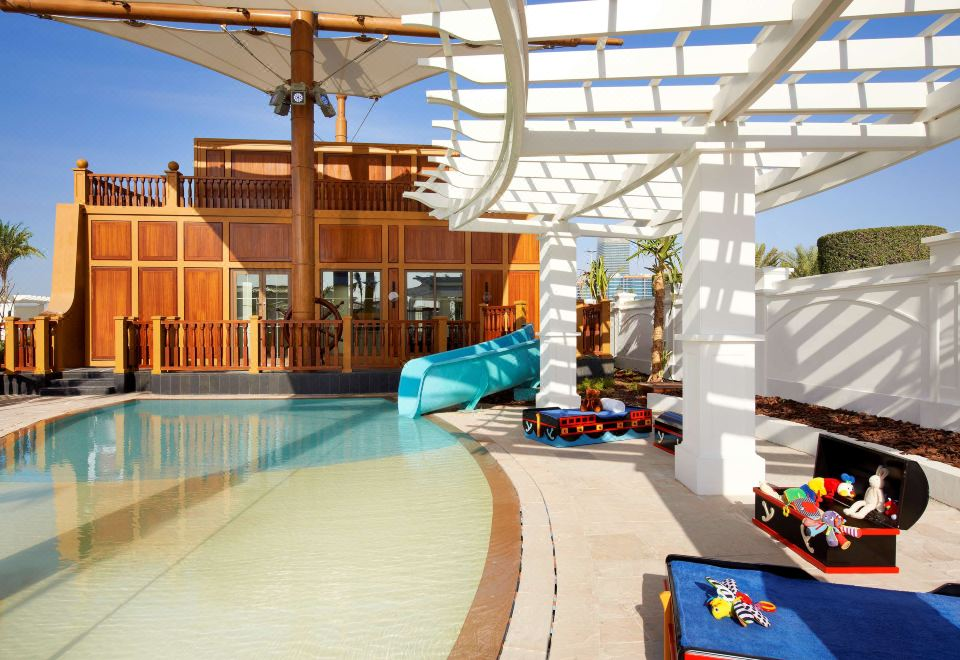
Elegant rooms with sweeping Corniche views, signature butler service, and refined dining. One of the best bases for city and water views. The butler program here is among the finest in the region—the level of advanced personalization before arrival and anticipatory service throughout the stay is exceptional even by Abu Dhabi’s high standards.
👉 Check availability at St. Regis Abu Dhabi—Trip.com
Qasr Al Sarab Desert Resort by Anantara
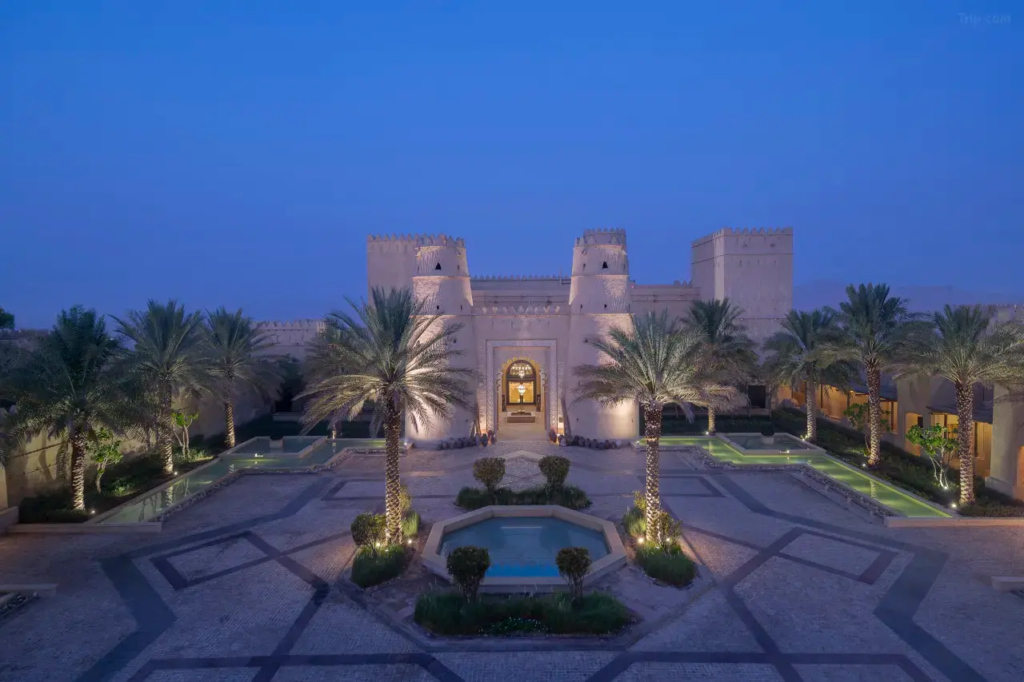
Sitting deep in the Liwa Desert and surrounded by enormous rolling dunes, this resort feels completely different from both Abu Dhabi and Dubai. It combines luxury with traditional Arabian design, with camel rides, desert sunsets, and stargazing, making it one of the most unique hotels in the UAE. The Liwa Oasis—the largest uninterrupted sand desert in the world outside of Antarctica—surrounds the property on every side. Arriving here, an hour and a half from Abu Dhabi, is a journey into a landscape so empty and so ancient it recalibrates your sense of scale.
👉 Check availability at Qasr Al Sarab — Trip.com
The Cultural Experiences
Abu Dhabi’s cultural infrastructure is extraordinary—and almost entirely less crowded than its Dubai equivalents.
Sheikh Zayed Grand Mosque—one of the largest mosques in the world, with 82 domes, over 1,000 columns, and the world’s largest hand-knotted carpet (5,627 square meters, made by 1,200 artisans over two years). The mosque is open to non-Muslim visitors in modest dress and is one of the most genuinely awe-inspiring buildings constructed in the 21st century. Entry is free.
Book a private Sheikh Zayed Mosque guided tour—Trip.com
Louvre Abu Dhabi — designed by Pritzker Prize-winning architect Jean Nouvel, the Louvre Abu Dhabi sits on Saadiyat Island beneath a 180-meter perforated dome that creates a “rain of light” effect inside the galleries. The collection spans 10,000 years of human civilization and includes works on loan from the Louvre, the Musée d’Orsay, and the Centre Pompidou. It is, architecturally and intellectually, one of the most extraordinary museums in the world.
Book Louvre Abu Dhabi tickets — Trip.com
Saadiyat Island Cultural District — beyond the Louvre, Saadiyat Island is becoming the UAE’s cultural capital, with the Zayed National Museum, a Guggenheim Abu Dhabi, and a performing arts center all in various stages of completion. The island’s beaches are among the finest in the UAE.
The Food Scene
The food scene in Abu Dhabi felt more refined, less performative, and significantly less overwhelming. Restaurants often feel calmer and more focused on the overall experience rather than simply being flashy or social media-driven.
Abu Dhabi holds seven Michelin stars — fewer than Dubai, but growing rapidly. The dining scene here rewards those who seek it out rather than rewarding spectacle.
The Direct Comparison
| Category | Dubai | Abu Dhabi |
|---|---|---|
| Vibe | Electric, relentless, spectacular | Refined, calm, spacious |
| Hotels | Most choices globally | Better value, more space |
| Food | 14 Michelin stars, vast variety | 7 Michelin stars, more refined |
| Beaches | Beautiful but busy | Cleaner, calmer, less crowded |
| Culture | Growing scene | UNESCO museums, Grand Mosque |
| Safety (2026) | 6th safest city globally | #1 safest city globally |
| Cost (luxury/day) | $250–$400+ | $200–$350 |
| Nightlife | Extensive | Limited |
| Best for | Energy, variety, first-timers | Romance, culture, experienced travelers |
Who Should Choose Dubai
- First-time UAE visitors—Dubai’s attractions are simply more varied and more spectacular per square kilometer
- Travelers who want maximum dining, nightlife, and shopping options
- Families with children who want theme parks, aquariums, and entertainment variety
- Anyone flying through Dubai International Airport (one of the world’s busiest hubs)
Who Should Choose Abu Dhabi
- Couples seeking romance and genuine relaxation without the relentless energy of Dubai
- Travelers seeking calm luxury—Abu Dhabi is the choice when you want to slow down
- Cultural travelers—the Louvre Abu Dhabi and Sheikh Zayed Mosque are genuinely world-class
- Desert experience seekers—the Liwa Desert and Qasr Al Sarab are unique to Abu Dhabi
- Budget-conscious luxury travelers—luxury accommodation in Abu Dhabi is cheaper than in Dubai, while the standard is the same
The Best Answer: Do Both
Abu Dhabi and Dubai are only separated by 140 km — a 90-minute commute on a contemporary highway. Begin with the gloss of Dubai and the thrill of adrenaline, then relax in the quality and maturity of Abu Dhabi.
The ideal itinerary for a first UAE trip:
Days 1–4: Dubai — Burj Khalifa, Palm Jumeirah, desert safari, Michelin-starred dinner, beach club afternoon
Days 5–7: Abu Dhabi — Sheikh Zayed Grand Mosque at dawn, Louvre Abu Dhabi, Emirates Palace dinner, day trip to Qasr Al Sarab
This combination is the most complete luxury experience the UAE offers — and the drive or private transfer between the cities takes less time than most European airport transfers.
Book a private transfer from Dubai to Abu Dhabi.
Practical Information for 2026
Best time to visit: November to March for cooler weather (22–30°C) and outdoor festivals. Summer (June–September) brings temperatures above 40°C and is best avoided for outdoor activities, though hotel rates drop dramatically.
Visa: Most Western passport holders receive a free 30-day visa on arrival.
Dress code: Both cities are tolerant and international, but modest dress in public spaces is advisable. The Grand Mosque requires full coverage (abayas available at the entrance). Avoid public displays of affection.
Currency: UAE Dirham (AED), pegged to the US dollar at approximately 3.67 AED per USD. All major credit cards are widely accepted.